Build a Music Career You Can Pause Without Starting Over
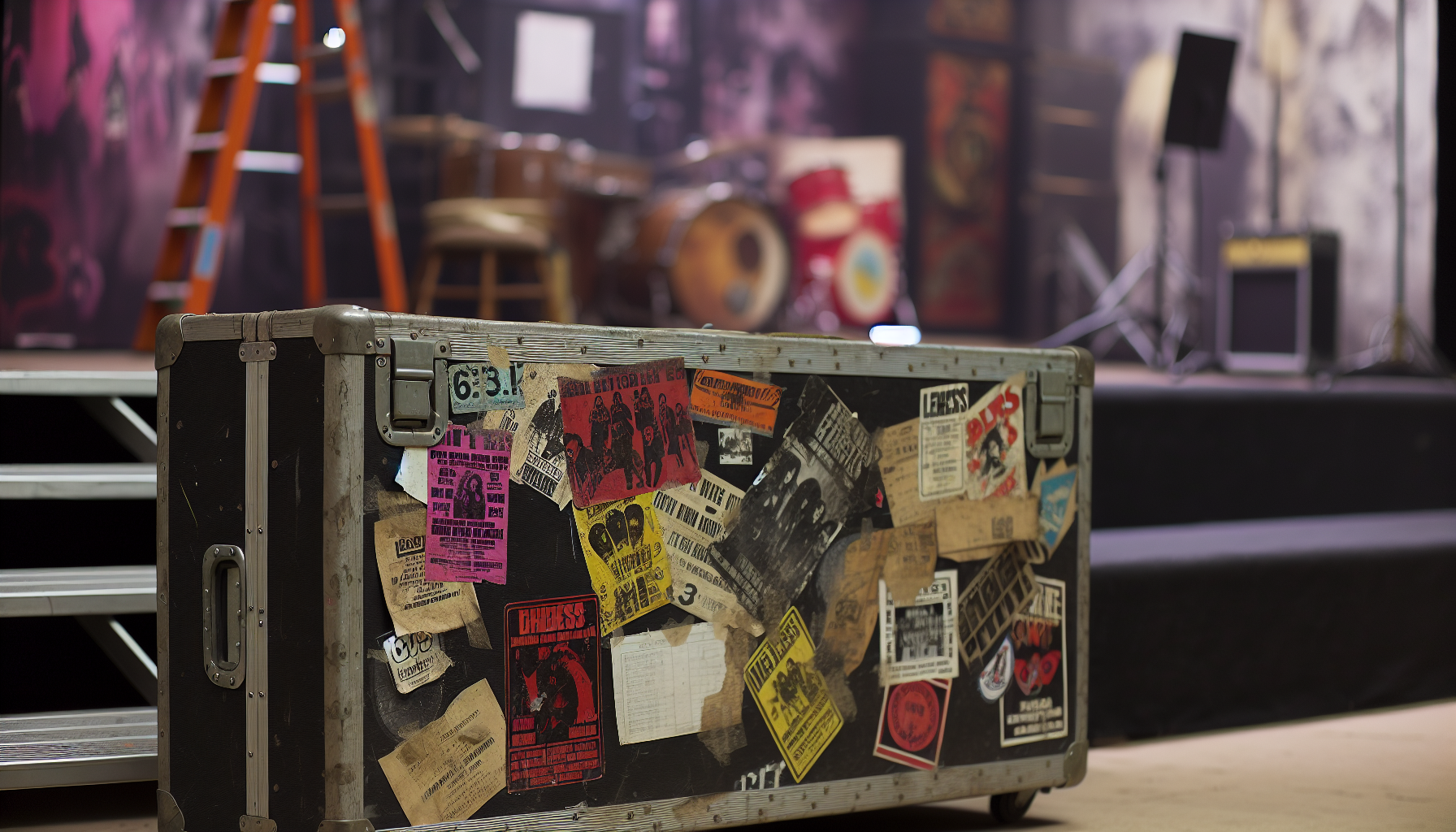
Chris Slade, whose career includes work with AC/DC and David Gilmour, has announced his retirement. The report describes him sharing the news “with a heavy heart” on social media. For fans, it marks a significant change. For working musicians, it also raises a practical question: how do you build a career that can withstand a change in pace?
Retirement is not a failure to stay relevant. Neither is taking a month away from touring, changing your lineup, or deciding that six well-planned shows beat twenty exhausting ones. But those choices become much harder when every contact lives in someone else’s inbox and every household bill depends on your next performance fee.
You do not need to be approaching retirement to prepare. Before you accept another show, you can strengthen your finances, document your live operation, and build income beyond the stage. Here is how to make your music career more resilient without turning your creative life into an administration marathon.
Make Your Live Show Less Dependent on Memory
Slade’s career offers useful perspective on longevity. He played AC/DC’s Monsters of Rock performance at Donington Park on 17 August 1991 and later returned for the band’s Rock or Bust touring era. Those performances belong to different chapters of a long working life.
Independent artists also move through chapters: different collaborators, different budgets, different physical demands. Your practical task is to make transitions manageable, rather than assume today’s setup will remain available forever.
Define your minimum viable show
Write down what your act genuinely needs to deliver a professional performance. Separate essentials from preferences.
For a four-piece, essentials might include a drummer who can play to a click, two vocal microphones, and a reliable way to run backing tracks. A particular amplifier model might be a preference, not a deal-breaker.
Create three approved formats:
-
Full show: Your normal lineup and production.
-
Reduced show: A smaller arrangement you have rehearsed and can accurately describe to a buyer.
-
Unavailable: Conditions under which you cannot deliver the agreed performance safely or professionally.
A reduced show is not permission to quietly replace a promised full-band set with an acoustic duo. Material changes need the buyer’s agreement and may require revised terms or audience communication.
Build a substitute-musician pack
Spend an hour assembling one folder containing:
-
Current setlists, song keys, tempos, and arrangements.
-
Rehearsal recordings with clear count-ins and endings.
-
Charts or chord sheets, labelled by song and version.
-
Playback instructions, patch lists, and technical contacts.
-
Show-day expectations, including rehearsal requirements and payment terms.
Then test it. Ask a trusted musician unfamiliar with one arrangement to prepare it from the folder. Their questions reveal what you have left undocumented.
Insider tip: Budget for a paid preparation rehearsal before you urgently need a substitute. A great player is not automatically familiar with your cues, transitions, or equipment. Documentation reduces rehearsal time; it does not eliminate it.
Book Your Actual Capacity, Not Your Imaginary Capacity
An empty date is not necessarily an available date. It may already contain a long drive, a day job shift, childcare, equipment maintenance, or the recovery time that makes the next performance possible.
Among the most valuable tour management best practices is treating those commitments as real constraints before accepting a booking.
Artist booking calendar tips that prevent expensive mistakes
Start by giving every proposed show a clear status:
-
Inquiry: Someone has asked, but nothing is reserved.
-
Hold: A provisional reservation with an agreed expiry or decision process.
-
Confirmed: Terms have been accepted and documented according to your booking process.
-
Cancelled: The date has been released, with any remaining obligations recorded.
Terminology varies between buyers, so confirm what a hold means instead of assuming everyone uses the same rules.
Next, add travel, rehearsals, load-in, soundcheck, performance, load-out, and realistic sleep windows. Show the whole commitment, not just the ninety minutes onstage.
For a hypothetical run through The Lexington in London, Hare & Hounds in Birmingham, and Brudenell Social Club in Leeds, do not calculate feasibility from driving time alone. Check accommodation, parking, vehicle access, venue timings, and the following morning’s obligations. These are illustrative venues, not confirmed bookings.
Before saying yes, follow this sequence:
-
Check every essential performer’s availability.
-
Map the complete journey and working day.
-
Confirm costs, payment terms, and technical requirements.
-
Identify conflicts with releases, employment, and personal commitments.
-
Accept only when someone owns each unresolved task.
Counter-intuitive advice: Leave some dates deliberately unsold. A recovery day or rehearsal buffer can protect the quality of several paid shows. An extra booking is not profitable if it triggers a cancellation, unsafe travel, or an avoidable equipment failure.
Price Shows So Time Off Becomes Possible
A fee is revenue, not take-home pay. If you never separate the two, a busy calendar can hide a fragile business.
Consider a hypothetical UK four-piece offered a £600 performance guarantee. These are planning figures, not quoted venue rates:
| Direct expense | Example cost |
|---|---|
| Vehicle hire | £120 |
| Fuel and parking | £95 |
| Accommodation | £100 |
| Additional food costs | £45 |
| Consumables | £20 |
| Total | £380 |
That leaves £220 before other applicable costs and tax. Transfer £60 to a band contingency fund, and £160 remains: £40 per member before personal tax.
If an agent’s commission, hired crew, rehearsal room, or other expense applies, include it. Confirm whether quoted figures include relevant taxes. Do not let a tidy spreadsheet conceal missing costs.
Calculate your minimum acceptable offer
For a separate door-only opportunity, assume you need the same £380 in direct costs, £160 in combined musician pay, and £60 for reserves. Your target is £600.
If your actual net receipt is £8 per paid admission after the venue’s share and agreed deductions, you need 75 paid admissions. Complimentary tickets do not count toward that target.
Ask the buyer for the settlement calculation in writing. Clarify ticket fees, deductions, payment timing, and what happens if sales fall short. Treat projected merchandise profit as uncertain rather than using it to justify a weak deal.
Then calculate your personal runway:
Available personal reserve ÷ essential monthly spending = months of runway.
If you have £1,800 available and essential spending of £900 monthly, that is two months. Exclude money already committed to tax, refunds, or upcoming tour costs.
You do not need a perfect emergency fund immediately. Start with an affordable transfer from each profitable show. The objective is to make a short pause less likely to become a financial emergency.
Keep Your Relationships When Your Schedule Changes
A career pause is easier to navigate when professional relationships belong to a maintained system, not a collection of half-remembered messages.
Whether you use a spreadsheet, artist management software, or booking agency software, record the same fundamentals:
-
Contact name, organisation, role, and professional contact details.
-
Venue location, capacity, and suitability for your act.
-
Previous offers, agreed fees, and settlement notes.
-
Last meaningful conversation and next follow-up date.
-
Who on your team owns the relationship.
For a growing team, OCTVE’s contact-management tools are one option to evaluate against this checklist. With any music industry CRM, check access permissions and export options before importing your contacts. The value is continuity: another authorised team member should be able to understand the conversation without reconstructing your inbox.
Keep notes factual and professionally relevant. “Prefers initial inquiries by email” helps. Personal gossip does not. Protect sensitive information and follow applicable privacy rules.
Here is a useful message when you are reducing your schedule:
Thanks for thinking of us. We are limiting travel during the next booking period, but we are interested in suitable regional dates. Please keep us in mind for Friday or Saturday opportunities within our agreed travel radius. I will follow up when our next availability window opens.
Adjust the details to your actual situation. You do not owe every contact private medical, family, or financial information.
Insider tip: Set the follow-up reminder before sending the message. Staying connected is much easier when it does not depend on remembering who you meant to contact three months ago.
Build One Income Stream That Does Not Require Another Show
Do not respond to uncertainty by launching six new businesses. Pick one offer that fits an existing skill and test whether anyone will pay for it.
A drummer might offer remote recording. A songwriter might teach a small workshop. A producer might provide arrangement feedback. None of these is automatically easy or passive; each needs a clear scope and sustainable pricing.
For a remote drum session, define:
-
What the buyer must supply: tempo, reference track, arrangement, and file specifications.
-
What you deliver: an agreed performance and named audio files.
-
How many revisions are included.
-
Delivery timing and payment schedule.
-
Credit, usage rights, and any restrictions agreed in writing.
Calculate your effective hourly return after preparation, recording, editing, revisions, and administration. A £100 job taking six hours is very different from one taking ninety minutes.
Offer a limited pilot to three relevant contacts. Ask what they need, deliver the agreed work, and review the actual time spent before setting a permanent price.
Also audit one existing release. Confirm songwriting splits, performer credits, ownership documentation, and relevant registrations. In the UK, PRS for Music and PPL administer different rights; check which registrations apply to your role rather than assuming one covers everything.
This does not guarantee meaningful royalty income. It does reduce the chance that work you have already completed remains poorly documented or difficult to license.
Warning: Avoid treating “exposure” as a substitute for clear rights and payment terms. A smaller, properly scoped job can be more valuable than a prestigious project with unlimited revisions and uncertain ownership.
Plan Changes Before You Have to Announce Them
The retirement report does not establish Slade’s reasons for stepping away, and there is no need to speculate. Your own continuity planning should likewise respect privacy while making responsibilities clear.
Create a one-page change plan with your bandmates or team. Cover temporary absence, permanent departure, and a decision to stop touring altogether.
Agree on these questions while relationships are good:
-
Who can communicate with promoters and approve changes?
-
Which commitments must be reviewed before any public announcement?
-
Who owns shared equipment, recordings, branding, and account access?
-
How will outstanding income and expenses be handled?
-
What professional advice is needed before changing agreements?
Use a qualified adviser for contracts, ownership disputes, or significant financial decisions. A band meeting cannot override existing obligations.
If a booked show is affected, contact the buyer promptly and privately. Explain what has changed, what options you can genuinely offer, and when you can confirm the next step. Do not promise a replacement performer before checking their availability and suitability.
For public communication, keep the essential information together: affected dates, the agreed ticket process, whether a replacement event exists, and where updates will appear. Coordinate refund language with the organiser or ticket provider rather than inventing a policy.
Finally, protect routine working conditions now. Use appropriate hearing protection, plan safe travel, and seek qualified help for persistent symptoms. These are career-maintenance decisions, not evidence of any particular reason behind another musician’s retirement.
Give Your Future Self Better Options
A durable music career is not necessarily the one with the most dates. It is one where your finances, relationships, and working methods give you room to make decisions deliberately.
You do not need to reorganise everything this week. Start with three actions:
-
Today: Review your next show’s real costs and block its complete travel and working time in your calendar.
-
This week: Build the first version of your substitute-musician folder and check your five most important professional contacts.
-
This month: Begin an affordable reserve contribution and test one clearly scoped, non-touring offer.
You may want to perform for decades. You may eventually want something different. Build the systems now that let either choice remain yours.